

dbt’s conference Coalesce 2025 took place at Resorts World Casino in Las Vegas. Unlike typical Vegas experiences that end in regrets, both personal and financial, this conference left me with a wealth of valuable insights and benefits. I came away with a deeper understanding of dbt’s product evolution and some exciting new features that I’m eager to share.
In this recap, I’ll walk you through the key announcements, my top takeaways, and what it all means for analytics professionals like you.
Emerging Partner of the Year
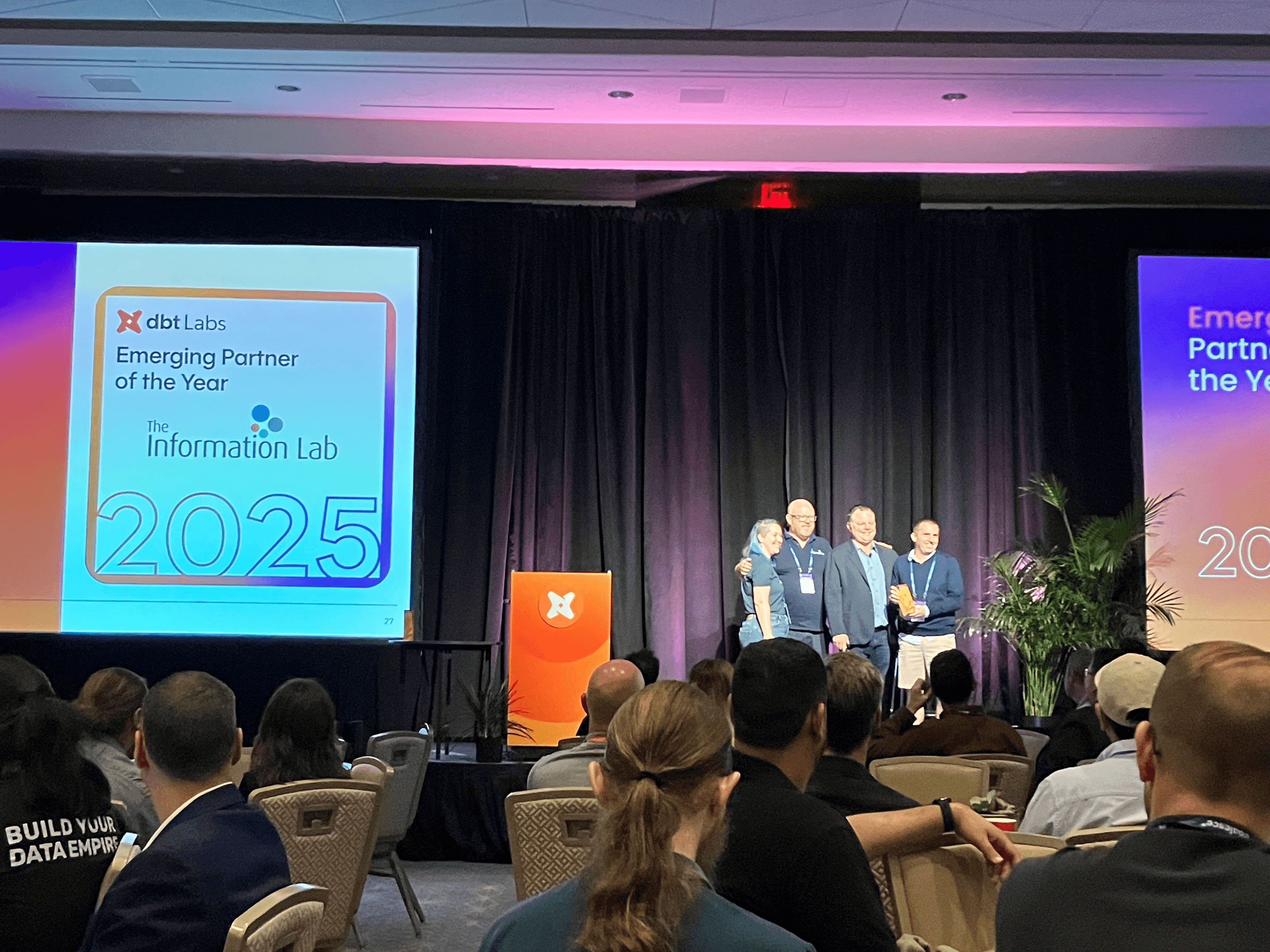
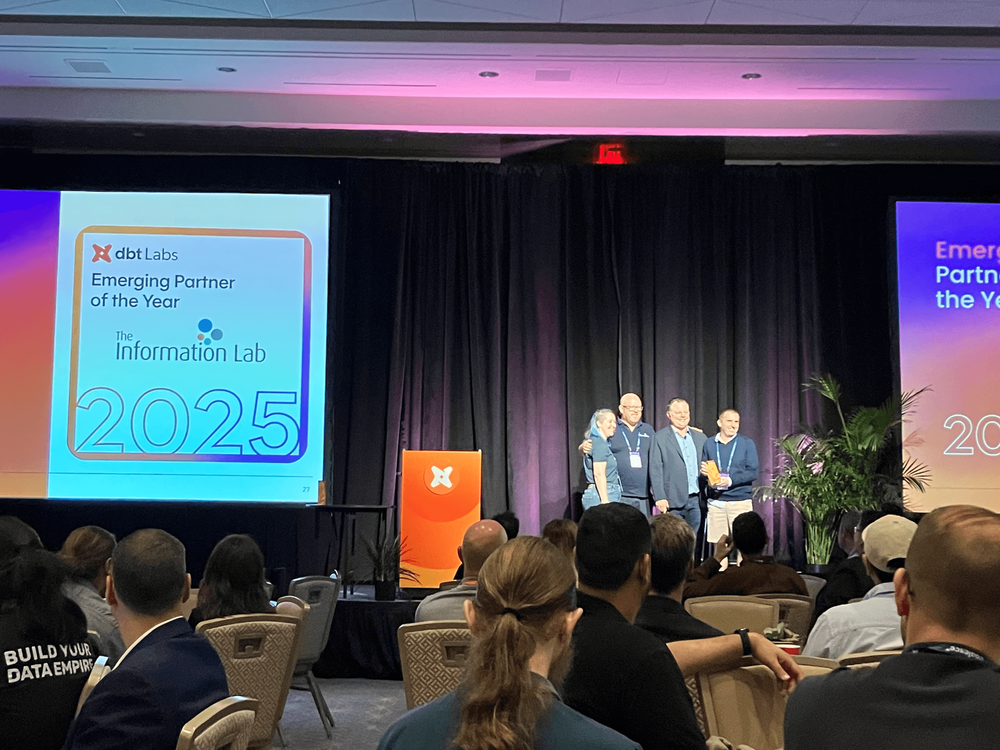
Just before the conference kicked off, The Information Lab was announced as dbt Lab's Emerging Partner of the Year!
Our teams across the UK, US, and beyond have been working to make dbt more accessible for data professionals. You might have attended one of our free in-person trainings in the UK, or seen our dbt presentation at Tableau Conference, or had support from one of our data engineering consultants. We look forward to building on this early success and continue support companies with dbt.
The Fivetran Merger
The merger between dbt and Fivetran was announced just before the conference, it was top of everyone's mind and I appreciated the transparent and direct way the leadership addressed it.
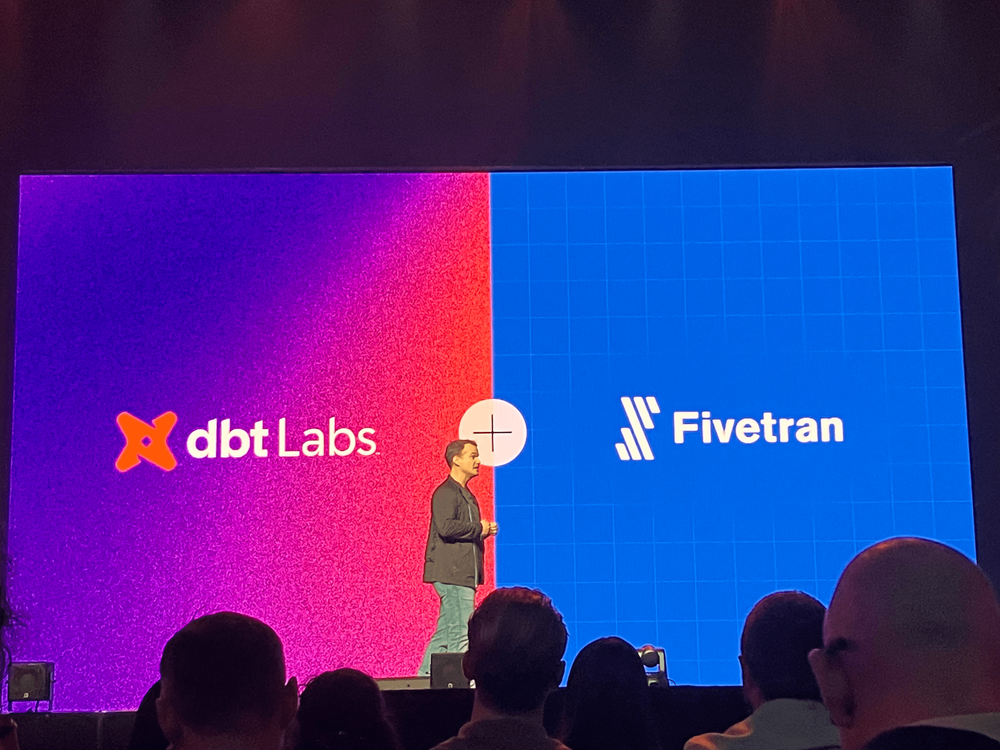
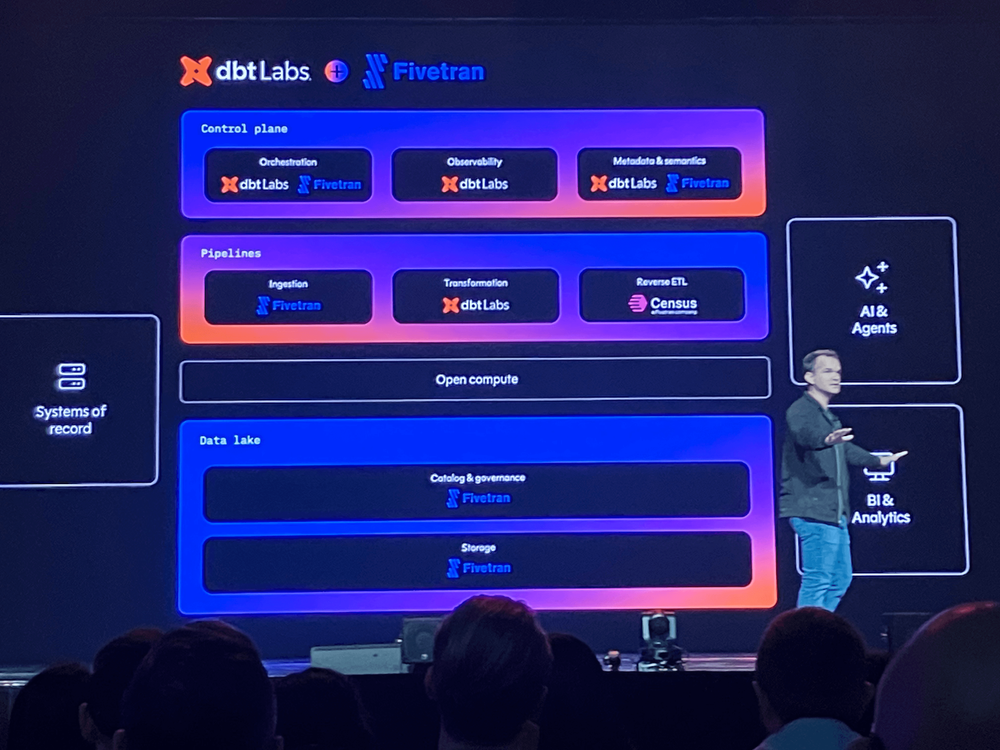
It’s important to note that Fivetran and dbt bring complementary strengths to the ELT aspect of data engineering. Fivetran focuses on the extraction and loading of data, while dbt excels at the transformation layer. In my experience, both tools have been used together effectively for years, so this merger feels like a natural progression. The two companies will continue operating their brand and products separately in the near term, which means immediate disruption is unlikely.
This is a signal of the AI-era data infrastructure rush, in which the new combined company positions itself as ‘open data infrastructure’ built for analytics and AI. Teams are being reminded that their data stack isn’t just for dashboards but will need to feed AI workflows too. During the keynote, we heard how a data platform was a choice; companies may choose to have multiple platforms, each with its own benefits, but the code you write should just work regardless of what platform you are on. So solutions built in dbt would work on Databricks, or Snowflake, or Microsoft Fabric.
Of course, one fear is that new features might come with additional costs or restrictions, which were addressed throughout the keynotes. Both CEOs remained committed to openness, stating that:
dbt Core and Fusion will both continue to be shipped under their current licenses.
We (dbt + Fivetran) will continue to actively maintain dbt Core.
We (dbt + Fivetran) will continue to support the dbt Community, via Slack, meetups, etc.
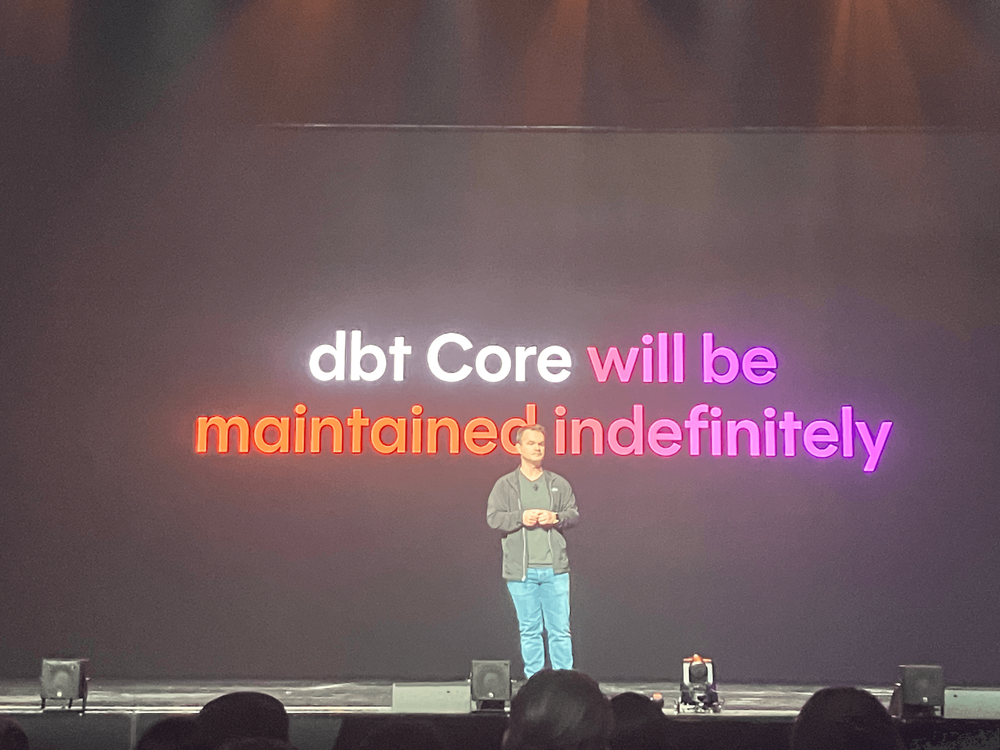
As time goes on, we’ll see how the integration unfolds and how the combined expertise from both companies, like how functionality from Fivetran’s SQL Mesh could be implemented in the dbt product.
dbt Fusion

dbt Fusion is the latest evolution of the dbt engine, built in Rust for incredible speed, stemming from the acquisition of SDF Labs earlier this year. dbt fusion brings a host of features to improve the day to day work of analytics engineers, such as:
Real-time error catching
Model and column name refactoring
SQL autocomplete and suggestions
In the demo, we saw how Fusion understands the entire codebase. For example, if you rename a column, Fusion can immediately show you all the dependent models that would be affected. This means you get instant feedback without having to run the entire pipeline, saving a lot of time and effort. In addition, plenty of quick time savers, like being able to preview the result of a Common Table Expression (CTE) without having to comment out code.
Lastly, Fusion introduces state-aware orchestration, which checks for new records and only builds the models that will change, making jobs run faster and leading to decent cost savings. While this is possible after configuring dbt source freshness, it is much more accessible as a native feature in dbt.
The full Keynote demo should be available on the dbt Labs YouTube channel, or you can see dbt fusion in this upcoming webinar 28 & 29 October 2025: Speed, simplicity, cost savings: Experience the dbt Fusion engine
dbt MCP and Agents
The remote dbt MCP server was officially made generally available. The MCP allows AI models to interact directly with your dbt project, opening up your dbt project to perform exploratory analysis or answer ad-hoc questions.
In one session from Indicium, we saw how the MCP server had been used with other tools to speed up data migrations, showing a large reduction in manual effort, resulting in a 7x reduction in migration time.
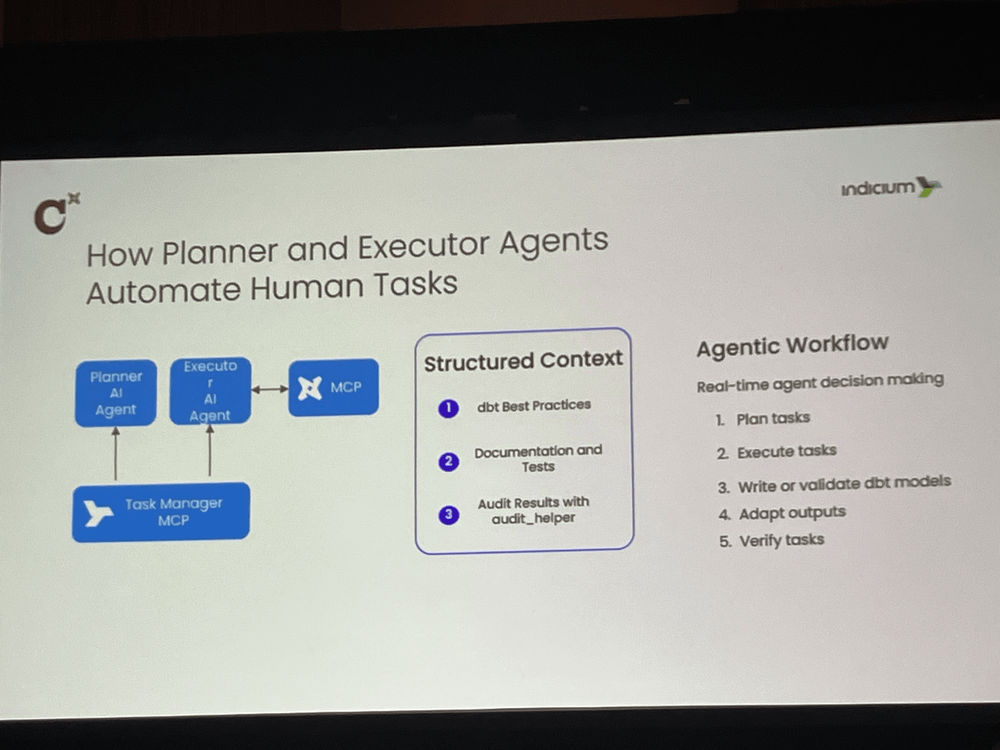
With the MCP, there was also the announcement of a range of role-based dbt Agents coming soon to dbt. These agents could perform analyst tasks, observe issues in the dbt project, and support developers building their dbt models.
Certifications
Aside from presentations, I was able to sit the dbt certification. This was a much better experience than taking the test at home. You simply brought your laptop, connected to power, and logged in with a provided code. The environment was set ready to go, and there was no checking in with an online proctor.
In addition, the certification costs $100 at the conference, a 50% discount, with additional discounts provided for those who didn’t pass during the session. If you were thinking about getting certified, I’d highly recommend taking the test at the conference while you have plenty of dbt developers and architects to support you in those final prep days.
Lastly, one feature I appreciated at the conference was the dbt full refresh room. It was a space where you could switch off your phone and laptop and just relax. It was a low-lit room, with yoga mats, eye masks and blankets. Perfect for if you’ve had too much of Vegas or need to take a rest before an exam.
Post Conference
I think there’s a good deal to be excited about if you’re a dbt user. The movement towards open data infrastructure means that solutions developed will be much more reusable. For example, a dbt model built from a Mailchimp connection would work on Snowflake, as well as Databricks, saving you time in a migration and supporting other developers working with Mailchimp data.
The developer-friendly functionality in dbt fusion is a welcome dose of ibuprofen for many data engineering headaches. Seeing the impact a code change has on the rest of the codebase without hitting run will be an invaluable time saver. And for more time savers, dbt’s MCP server provides an option for reducing those manual, ad hoc, ‘quick asks’ with your favourite AI model.